Aug 17, 2012

Best of Smashing Magazine


This Smashing eBook contains the best articles that have been published on Smashing Magazine from 2006 to 2011. It was released as a “Thank You” to Smashing readers on the occasion of Smashing Magazine’s 5th Anniversary.

http://anniversary.smashingmagazine.com/best-of-smashing-magazine.zip

The orignal site :
http://www.smashingmagazine.com/ebooks/

Good Time.

Social Media for Corporate Innovators and Entrepreneurs


Social Media for Corporate Innovators and Entrepreneurs: Add Power to Your Innovation Efforts

“How can my company use social media to bring out better innovation faster?” This is the key question that I explore in this book, which covers issues such as:

• What are the benefits of using social media for innovation efforts?
• What are the challenges and how can you overcome them?
• How can the different social media platforms help bring out better innovation faster?
• How should companies approach social media for this purpose?
• How can innovation leaders get a better understanding of social media and start maximizing the value of their virtual networks?

Social media has the potential to be a game changer for how companies innovate and companies need to pay full attention to the intersection of open innovation and social media if they want to out-innovate their competitors. This might be unchartered territory, but it is full of interesting opportunities.

http://www.15inno.com/wp-content/uploads/2012/08/Social-Media-for-Corporate-Innovators-and-Entrepreneurs-by-Lindegaard.pdf

Orignal Site with Kindle version

http://www.15inno.com/2012/08/16/freebooks/

Aug 16, 2012

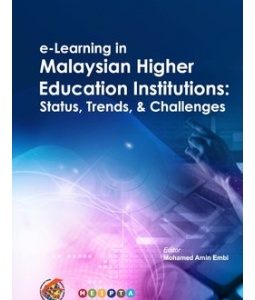
e-Learning in Malaysian Higher Education Institutions


It is a great free ebook about  e-learning in Malaysian 

Content 
Chapter 1 :Introduction
Chapter 2 :e-Learning Policy in Malaysian Higher EducationInstitutions
Chapter 3 :e-Learning Governance in Malaysian Higher EducationInstitutions
Chapter 4:Learning Management Systems in Malaysian HigherEducation Institutions
Chapter 5 :e-Learning Training in Malaysian Higher EducationInstitutions
Chapter 6 :e-Content Development in Malaysian Higher EducationInstitutions
Chapter 7 :Integration o e-Learning in Teaching & Learningin Malaysian Higher Education Institutions
Chapter 8 :Quality Assurance and e-Learning Future Plans
Chapter 9 :Summary o Findings on the Status, Trends, &Challenges o e-Learning Implementation
Chapter 10:Proposed Improvements & Policy Implication

By :
MOHAMED AMIN EMBI
Centre of Academic Advancement 
Universiti Kebangsaan Malaysia

http://www.scribd.com/doc/53498507/E-learning-in-Malaysian-Higher-Education-Institutions
Or
http://www.myebook.com/index.php?option=ebook&id=9131


Web 2.0 Survey & Polling Tools: A Quick Guide


A good guide :


CHAPTER 1 SURVEYMONKEY
CHAPTER 2 OBSURVEY
CHAPTER 3 POLLDADDY
CHAPTER 4 POLL EVERYWHER
CHAPTER 5 SURVEYTOOL
CHAPTER 6 ZOOMERANG
CHAPTER 7 FLUIDSURVEYS
CHAPTER 8 KWIK SURVEYS
CHAPTER 9 QUIZSNACK
CHAPTER 10 FLIST

By :
MOHAMED AMIN EMBI
Centre of Academic Advancement 
Universiti Kebangsaan Malaysia


http://www.scribd.com/doc/87624844/Web-2-0-Survey-Polling-Tools-A-Quick-Guide
Or
http://www.myebook.com/index.php?option=ebook&id=121628


Web 2.0 Content Creation Tools: A Quick Guide


CHAPTER 1 JING 1 1
CHAPTER 2 SCREENCAST-O-MATIC
CHAPTER 3 CAMTASIA STUDIO
CHAPTER 4 GO!ANIMATE!
CHAPTER 5 EDUCREATIONS
CHAPTER 6 ISSUU
CHAPTER 7 MYEBOOK
CHAPTER 8 FLIPSNACK
CHAPTER 9 GLOGSTER
CHAPTER 10 PRESENT.ME

A web 2.0 guide on selected content Creation Tools 

By
MOHAMED AMIN EMBI
Centre of Academic Advancement 
Universiti Kebangsaan Malaysia

http://www.scribd.com/doc/98946511/Web-2-0-Content-Creation-Tools-A-Quick-Guide

Web 2.0 Sharing Tools: A Quick Guide


This is a good resource 


CHAPTER 1 SLIDESHARE
CHAPTER 2 ZOHO SHARE
CHAPTER 3 SCRIBD
CHAPTER 4 GOOGLE DOCS
CHAPTER 5 EVERNOTE
CHAPTER 6 YOUTUBE
CHAPTER 7 FLICKR
CHAPTER 8 DROPBOX
CHAPTER 9 4SHARED
CHAPTER 10 PEARLTREES

By :
MOHAMED AMIN EMBI
Centre of Academic Advancement
Universiti Kebangsaan Malaysia

http://www.scribd.com/doc/74330492/Web-2-0-Sharing-Tools-A-Quick-Guide

Digital and Media Literacy: A Plan of Action


The Knight Commission recognized that people need tools, skills and understanding to use information effectively, and that successful participation in the digital age entails two kinds of skills sets: digital literacy and media literacy. Digital literacy means learning how to work the information and communication technologies in a networked environment, as well as understanding the social, cultural and ethical issues that go along with the use of these technologies. Media literacy is the ability to access, analyze, evaluate, create, reflect upon, and act with the information products that media disseminate.

Digital and Media Literacy: A Plan of Action, a new policy paper by Renee Hobbs, Professor at the School of Communications and the College of Education at Temple University and founder of its Media Education Lab, proposes a detailed plan that positions digital and media literacy as an essential life skill and outlines steps that policymakers, educators, and community advocates can take to help Americans thrive in the digital age.

The paper focuses on steps to ensure that citizens are equipped with the analytical and communications skills they need to be successful in the 21st century.  It also proposes the integration of digital and media literacy into advocacy campaigns, education curricula, and community-based initiatives. From parents concerned with online safety issues, to students searching for information online at home, schools and libraries, to everyday citizens looking for accurate and relevant health care and government resources, all Americans can benefit from learning how to access, analyze, and create digital and media content with thoughtfulness and social responsibility.

Hobbs’ plan of action focuses on helping people of all ages not simply to use digital tools but also to discover both the pleasures and the power of being well-informed, engaged and responsible consumers and producers of information. Although investments in technology have increased significantly in recent years, Hobbs notes that simply purchasing the latest educational tools and technologies does not necessarily lead to digital and media literacy. Many American parents mistakenly believe that simply providing children and young people with access to digital technology will automatically enhance learning. But by encouraging digital and media literacy education, citizens will have life skills necessary for full participation in their communities.

To accomplish this, Hobbs specifically calls for:

supporting community-level digital and media literacy initiatives, including promoting community partnerships and creating a Digital and Media Literacy (DML) Youth Corps to bring digital and media literacy to underserved communities and special populations via public libraries, museums and other community centers;
developing partnerships for teacher education so teachers can be prepared to educate their students on digital and media literacy;


developing measures to assess learning progression and video documentation of best practices for digital and media literacy instructional strategies; and
increasing visibility for digital and media literacy education through public service announcements, entertainment-education initiatives, and an annual educator conference.
With increased education and understanding of digital and media literacy, Hobbs observes, citizens will be able to minimize the potential negative dimensions of increased information flow and instead use media and technology to improve their lives and communities.

The policy paper is the second in a series of papers being released by The Aspen Institute Communications and Society Program and the John S. and James L. Knight Foundation and focused on implementing the Knight Commission’s 15 recommendations for creating healthy informed communities.

by Renee Hobbs