Showing posts with label ISD. Show all posts

Jan 21, 2013

62 Tips on Effective eLearning Instructional Design -ebook


   It’s easy to be overwhelmed by the new learning technologies that become available every day: mobile apps, 3-D virtual worlds, geolocation, MOOCs, new development tools, and on and on. But despite the allure of these toys and shiny objects, the success of any eLearning project rests primarily on effective instructional design, not on any mix of technologies. Only eLearning that addresses the needs of learners and stakeholders—and does it in ways that facilitate learning transfer, knowledge retention, and skills development—has any significant value.
You need expert help to get past the distractions. This eBook features tips from 62 from top eLearning professionals and instructional design experts, offering guidance in areas including:
  • Making Learning Stick
  • Effective Instructional Design and Development
  • Managing Project Costs and Time
  • Demonstrating Your Value
  • Documenting and Managing Your Designs and Standards
  • Designing for Mobile
  • Customizing and Personalizing Learning

Contributing Editor, Karen Forni


http://www.elearningguild.com/publications/index.cfm?id=24&from=home


Sep 9, 2012

Creating e-Learning that Makes a Difference - free kit


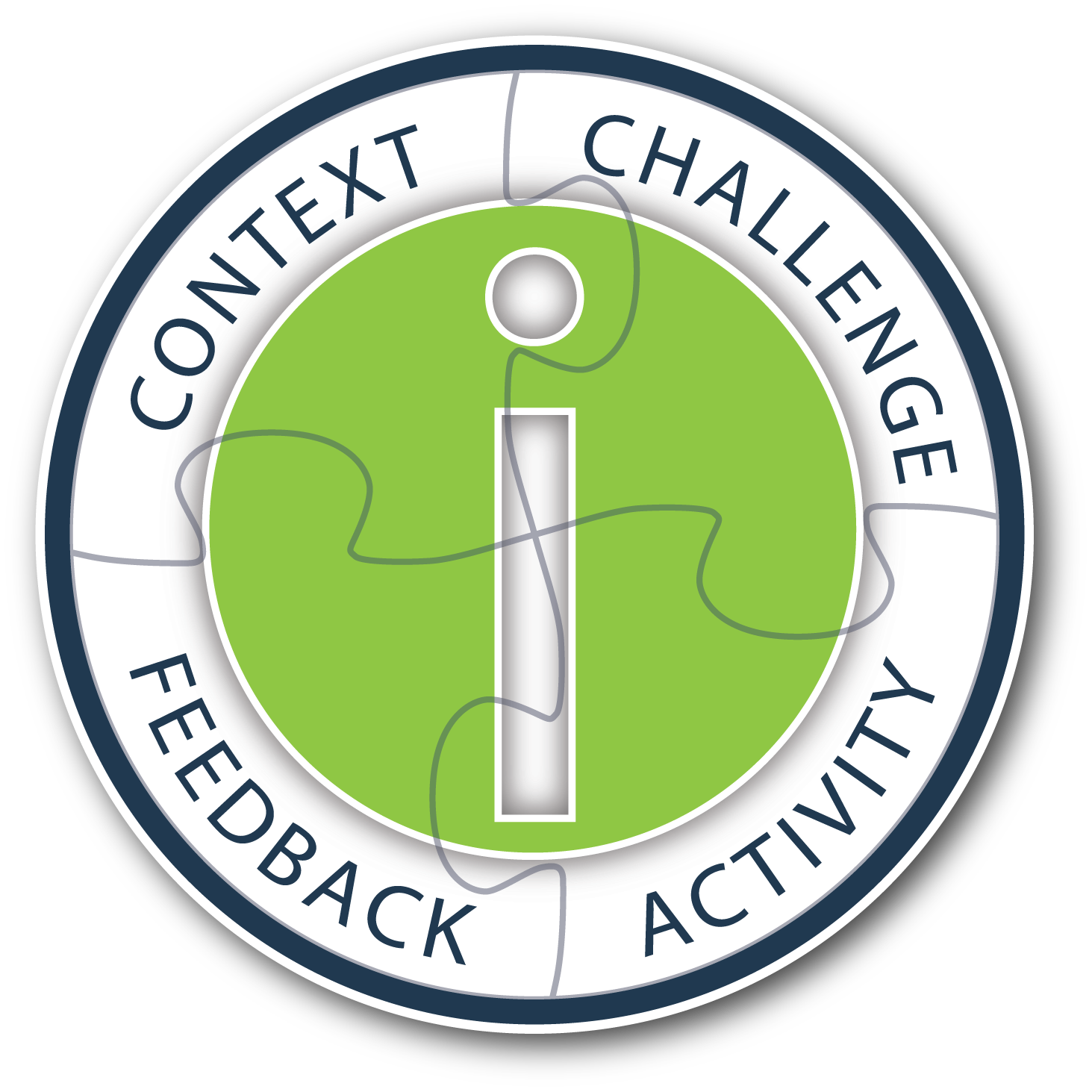
In this kit, Ethan Edwards covers the concept of instructional interactivity, and demonstrates how it can transform the learning experience for learners working independently through an e-learning program. Get specific real-world examples that give meaning to the four essential components of instructional interactivity, CCAF, which include: Context, Challenge, Activity, and Feedback.

In this kit, you will learn:

the value of true instructional interactivity for creating engaging, effective e-learning
the four essential design components of instructional interactivity which include: Context, Challenge, Activity, Feedback
to design engaging contexts, motivating challenges, appropriate activities, and instructional feedback into interactive design
the critical elements of any authoring tool used to create instructional interactivity
This kit includes:

White paper
60-minute webinar
Presentation slides from webinar
Q&A summary from webinar
Examples site showing CCAF in action

http://info.alleninteractions.com/ccaf-e-book/

good time

Aug 22, 2012

Best Digital Storytelling Examples and Resources- ebook


10 Digital Storytelling Projects

In short, digital storytelling refers to creating and distributing a story using digital tools. That's the obvious answer. Let's explore that answer a little more.
Depending upon who you ask, digital storytelling can refer a lot of things. In general you will find that when people talk about digital storytelling they're referring to videos and podcasts. But digital storytelling can also refer to creating interactive media in the forms of ebooks, maps, and timelines. And still to some teachers digital storytelling refers to the use of digital images to tell a story.

This work  ten digital storytelling projects developed and conducted by educators just like you and me.

Editor:
Richard Byrne

Contributing Authors:
Wayne Cherry, Jr.
Rebecca Hersh
Gayle Spinnel-Gellers
Mary-Ellen Sargiotto
Karen Orlando
Alisa Wright
Kurt Gosdeck
Brad Bahns
Jacquelyn Whiting
Shar Dean
Leslie Cataldo Savage

A Free eBook from Free Technology for Teachers .

Your e-Learning Investment - Free Webinar


 How Allen Interactions Achieves Business Impact & Boosts Learner Performance

IN THIS WEBINAR YOU WILL LEARN HOW TO:

maximize your investment in performance-based and skill-based learning initiatives
re-align current training needs for greater budget impact
apply a new instructional design model to your learning initiatives for maximum learner engagement and performance

PRESENTED BY: Paul Howe, Vice President of Sales, Allen Interactions

WHEN: Wednesday, August 22, 1:00 - 2:00 pm Central

You can Register here :

Good time .

Aug 20, 2012

Interactivity, Games and Gamification: Creating Engaged Learners


Session Description :
Based on the bestselling learning book, “The Gamification of Learning and Instruction” this presentation introduces, defines, and describes the concepts of gamification, games for learning and interactivity. It then dissects the elements of games and describes how they can be applied to the design and development of interactive learning. 

The presentation is based on solid research including peer-reviewed results from dozens of studies that offer insights into why game-based thinking and mechanics makes for vigorous learning tools. Not all games or gamification efforts are the same, creating engaging learning using game-based thinking  requires matching instructional content with the right game mechanics and game thinking. Moving beyond the theoretical considerations, the presentation explores three methods for designing interactive learning based on concepts from games.

About Karl Kapp
Karl M. Kapp, Ed.D., CFPIM, CIRM, is a consultant, scholar, and expert on the convergence of learning, technology and business operations. His background teaching e-learning classes, knowledge of adult learning theory, and experience training CEOs and front line staff provides him with a unique perspective on organizational learning. His experience with technology companies and high-tech initiatives provides him with insights into the future of technology. He shares those insights and perspectives through writing, consulting and coaching with clients in the field of e-learning.

(60 Minute Session)

Recodred Webinar :


Implementing the ADDIE Model in Corporate e-Learning


       Jeff Clay, a newly appointed project manager in the Webanywhere Workplace team, will demonstrate how Walmart has successfully used the ADDIE (Analyze, Design, Develop, Implement, Evaluate) model for eLearning and classroom training and development.  Primarily used for managing instructional design, Jeff will discuss how the ADDIE model can provide structure for other workplace training methods, and how Webanywhere can assist you in implementing this model.

The webinar is designed to provide insight into the workings of the training division at one of the world's largest and most successful corporations.  With over 1 million learners worldwide, the scale of their work has been truly epic and this webinar will provide a real life insight which will support your vision for learning and development.


Good Time

Jul 26, 2012

62 Tips on Graphic Design, UI/UX Design, and Visualization for eLearning


Effective eLearning deliverables require more than just text and few random graphics. Good graphic design, user interface (UI) design, and user experience (UX) design aren’t optional – they’re necessary to ensure maximum learner comprehension and retention.

We asked some of the most noted experts in the field to give us their best tips for graphic design, UI, UX, and visualization. What follows are 62 tips from 12 contributors, focusing on topics such as what is best illustrated by a still image vs. an animation; why navigation should be at the bottom of a page; and the importance of keeping virtual keyboards in mind.

This complimentary eBook draws on the experience of top professionals who are leading sessions in The eLearning Guild’s August 2012 Online Forum, “Graphic Design, UI/UX Design, and Visualization for eLearning.” Let their expertise guide you in areas including:

Highlighting Learning
Aesthetic Considerations
Tricks and Tools

Contributing Editor, Karen Forni

Jul 6, 2012

lean-ISD ebook


This book received an ISPI Award of Excellence in 2002 in the category of Instructional Communications

lean-ISD ebook
Begun in 1983 as “The Curriculum Manager’s Handbook” – it was published in 1999 as lean-ISD.
This book fully covers the ISD – Instructional Systems Design or ID – Instructional Design concepts, models, methods, tools and techniques for  The PACT Processes for T&D/ Learning and Knowledge Management Systems, including the 3 levels of ISD:
1- CAD – Curriculum Architecture Design and
2- MCD – Modular Curriculum Development/Acquisition (the ADDIE-like level in PACT  at the final product-level of Instructional Product Design in PACT), and
3- IAD – Instructional Activity Development/Acquisition (another ADDIE-like level in PACT at the component-level of Instructional Product Design in PACT), and

Those 3 levels of ISD are enabled/supported with a common performance-oriented Performance & Instructional Analysis methodology-set, and a common performance-oriented Performance & Instructional Project Planning & Management methodology-set, with adapted processes, steps and tools, shared across those 3 levels of ISD in PACT: CAD, MCD and IAD.
These ISD methods and processes were field tested hundreds of time by dozens of Practitioners working in teams or solo – with the Client Teams – in the collaborative approach that is PACT. This book was created to augment formal workshops and coaching session delivered by Guy Wallace.

Jul 1, 2012

15+ eLearning Storyboard Templates


If you have to create a storyboard for an e-learning course you’re working on, odds are you’ve come to the web to browse around and get ideas on what you want to include in it. To make that easier for you I’ve compiled a gallery of 15+ e-learning storyboard templates and samples available on the web. Hopefully going over these examples will help you narrow down what you should include in your own storyboard document.

You can complete reading and download Storyboard Templates from this link:

Jun 29, 2012

Introduction to Instructional Systems Design Free Course


Instructional Systems Design is the process of designing and developing instructional courses or materials that bring greater efficiency and effectiveness to acquiring knowledge or skills for learners. This free online course in Instructional Systems Design reviews important aspects such as learning theories and learning objectives and how they influence the design process. It also reviews the role of memory, needs analysis, and design models such as ADDIE (Analysis, Design, Development, Implementation, and Evaluation). Robert Gagne's Nine Events of Instruction are also discussed with examples of their application and use. Finally, learning technologies and how they are used to deliver training are reviewed, as well as techniques for measuring and evaluating the effectiveness of the instructional materials. This course will be of great interest to all human resources, teaching and training professionals who are involved in training, instructional design and e-learning, and who would like to learn more about important aspects of instructional systems design and their use and application in designing and developing highly-effective instructional materials or courses.
Introduction to Instructional Systems Design is originally from and published by Marina Arshavskiy and has a duration of 3-4 Hours for the average learner.

It is from alison :

Jun 16, 2012

Managing Projects and SMEs for eLearning: Proven and Practical Solutions


Whether you are an eLearning designer, developer, trainer, or manager, you probably need to deal with project-management issues and with subject-matter experts. Do you have the time and resources you need to lead or contribute to a successful project? How can you get your subject-matter experts (SMEs) to be partners in, rather than obstacles to, project success? Join this Online Forum to learn proven strategies and tactics for successfully managing eLearning projects and SMEs.

Managing eLearning Projects: A Survival Guide for Instructional Designers, Gus Prestera,
Leading SMEs to Water (and How to Make Them Drink), Shawn Rosler
Blending ADDIE and PMBOK for Successful Training Projects, Allan Harris
Getting the Content You Need from Your SMEs: A Streamlined Approach, Jennifer De Vries
Agile Estimation and Release Planning Techniques that Really Work, Sumeet Moghe
Acquiring Tacit Knowledge from SMEs, Sudeshna Chatterjee
Why Projects Fail: Recovery Tips, Dave Goodman & Karen Beckman
Turning your SMEs into Savvy Content Developers, Edward Reilly
What is Really Important to Your Learning Project?, Anita Rosen

Online Forum
July 26 & 27, 2012

Storyboard Templates and Resources


And here’s what  included in the storyboards.

In the main frame:
■Textual content
■Graphics (even if rough representations)
■Screenshot or representation of animations, interactives, etc.
■Buttons and/or navigational features
■Page orientation
In the side frames:
■Navigational info (i.e. where each button or link will take the user)
■Text for pop-ups or rollovers
■Media info (e.g. info about the animation, video, audio, etc.)
In the bottom frame:
■Notes to developers, SMEs, or anyone else that may have access to the storyboard
■Notes that won’t fit in the side frames
■Any pertinent notes that don’t fall under “Navigation” of “Media”
■Color requirements, screen size, graphic sizes, etc.
It is from

Jun 8, 2012

Rapid Storyboarding and a FREE Template


It is from :

What it’s good for
You can use it for:
Building quick scenarios where characters are interacting with each other or the user. And I also like having my characters as silhouettes. I can’t tell you how many times meetings about mockups get turned into hour long arguments about the character I chose for the mockup.
Mocking up interactions that involve buttons, whitespace, etc

You can download it with instructions from here :

May 3, 2012

Storytelling Delivers Effective E-Learning - webinar


In this webinar, Rachel Ashkin, Chief Operating Office of Brandon Hall Group, Dawn Adams Miller, from Cisco’s Learning & Development Solutions Group, and Matt Lisle, Instructional Designer at Enspire Learning show you how the graphic novel approach was used to engage learners in a corporate-wide initiative at Cisco. You’ll learn how the project progressed from selling the concept to the stakeholders, through design, development, implementation and deployment. We also cover tools, costs, project management, and what the metrics are telling us.

Googd Time.

Apr 6, 2012

58 Tips for Breakthrough eLearning Instructional Design - book


Instructional Design (ID) is — or at least should be — the foundation for effective eLearning. Whether you are new to ID or have been designing eLearning for a while, it’s easy to get stuck in certain ways of doing things. That’s when you need some new ideas!
This complimentary eBook draws on the ideas and experience of 14 ID experts who are leading sessions that are part of The eLearning Guild’s May 2012 Online Forum on “eLearning Instructional Design: Advanced and Breakthrough Techniques.” These tips, which will enhance the way you design eLearning, are organized into four general categories:
Research
Design
Development
Project management
Contributing Editor, Chris Benz

Nov 24, 2011

Creating Visual Stories That Resonate


Teachable moments begin with transforming an audience, but an audience will only change if you resonate with them.
Join us for this TrainingIndustry.com webinar, sponsored by GoToTraining, to hear presentation innovator Nancy Duarte demonstrate a new way to create a powerful connection with your audience. Nancy will show how to communicate with carefully crafted messages and how to train learners so they are transformed and help their organization succeed.
Attend this live, interactive webinar and discover how to:
  • Develop compelling messages
  • Communicate your materials and message
  • Use time-tested story-telling principles to connect
  • And more...
Register today for this free, one-hour webinar

Wednesday, December 7
2pm ET / 11am PT


Aug 2, 2011

The essential guide to designing inclusive e-learning


Three different perspectives reveal why designing inclusive e-learning is a no-brainer.

About this guide
The guide explains how to implement e-learning that is accessible to your whole audience, and covers:

• What to consider at the start of a project
• How best to design inclusive e-learning
• What to consider when writing for a diverse audience
• Testing accessible e-learning
• PLUS: a personal account on what it's really like to learn with a disability

Jul 30, 2011

How to Add "Gamification" in Your eLearning Design - Webinar


Session Description
Do you know how Gamification can boost learning effectiveness?
Gamification is the application of theories in gaming,its attendant rewards and its motivational impact. It has caught the attention of both learning designers and elearning developers because gamification presents new opportunities to raise the learner's engagement and learning applications. But how to make it a practical enhancement to the elearning design is a mystery.
In this webinar, Ray Jimenez will present case studies on how to apply gamification to enhance your eLearning projects.
Learning Benefits:
  • The impacts of gamification in eLearning design
  • Its similarities and differences from other activity and interactive approaches
  • The essential parts and components that make gamification successful
  • The step-by-step process of adding gamification in your eLearning design
  • Demos and examples of eLearning with gamification models
About Ray Jimenez
Ray Jimenez is the Chief Learning Architect and Founder of Vignettes Learning and Vignettes for Training, Inc., a systems development and consulting company specializing in e-Learning and Performance Systems, eLearning course development and interactive tools and VFTNetworks, a social learning community platform.
Ray has over twenty years experience in the consulting and training industry. He started his career as management consultant for Coopers and Lybrand in the areas of information management systems and management training. He has delivered lectures and workshops and consulted with clients in the United States, Asia and Europe. Ray has designed the architecture of several e-learning and e-performance software and management systems.
Ray is the author of "3-Minute e-Learning", "Scenario-Based e-Learning", "Do-It-Yourself eLearning, "Micro-Learning Impacts Report", and soon to be released books on "Micro-Learning Worlds" and "Story-Based eLearning Design." Among his clients are Booz Allen Hamilton, Ernst & Young, Psychological Associates, Transamerica Financials, Boeing Company, Ryland Homes, Countrywide Home Loans, Oracle Corporation, U.S. Air Force, Oakwood Worldwide, Aramark, Chipotle Restaurants and National Aeronautic Space Administration (NASA). Ray has presented to several associations and business organizations including American Society for Training and Development (ASTD), Training Magazine Events, and e-Learning Guild. Ray is an adviser to eLearning programs for University of California, Irvine, University of Texas, Southwestern Medical Center and Assumption University, Bangkok. He completed his PhD from St. Peter's College and Studies in Interactive Media from University of California, Los Angeles.
Workshop and briefing participants describe Ray as "fun", "engaging", "technically savvy", "has depth in e-learning experience", "balances theory and hands-on experience" and "inspiring".

Speaker:
  Ray Jimenez, Ph.D., Chief Learning Architect
  Vignettes for Training, Inc. 

  Date: Tuesday, Sept 20, 2011
  Time: 10:00AM Pacific / 1:00PM Eastern
  (60 Minute Session)
Technology Enhanced Teaching and Learning - Webinar


Technology-Enhanced Teaching: Tinkering, Tottering to Totally Extreme Learning
with Dr. Curtis Bonk
It is time to stretch toward the edges of learning from those of us tinkering on the shores to those whose learning approaches are tottering in new directions and even landing in totally extreme or alien lands. This talk will showcase examples from all three worlds - the world of the tinkerer, the totterer, and the totally extreme. Which world will you find yourself?

Join us and discover the three states of online learning today:The tinkerer: Content to tinker with blended forms of learning by embedding shared online videos, simulations, timelines, collaborative groups, and open access articles in their courses
The totterer: Such instructors hand over the keys to their learners and let them drive for a bit.
The totally extreme: These instructors tap into virtual explorers, artists, archeologists, and adventurers to excite their learners, embracing mobile, virtual, and telepresence technologies.

Thursday, October 6, 2011
6 - 8:30 p.m.
University Center Ballroom
Sponsored by the UMBC ISD-Training Systems Graduate Program

Jul 26, 2011

5 Day FREE Creative Presentation Ideas e-course

Most presenters would love to make their presentation design more creative and memorable. With this free Course, we’ll show you how to make your presentations stand out. It is not simply about better design but effective and powerful presentation of your ideas using visuals.
Creative Presentation Ideas is made up of five daily lessons that will come to you in your email inbox. Every day, we'll show you how to do something different in your PowerPoint slides. There are videos, examples and additional resources to give you more creative ideas.
It's a useful course for any presenter, and will get you well on your way to becoming a more effective presenter.

What does this e-course contain?

  • Day 1: Five Ways to Present Data Creatively
  • Day 2: Seven Creative Ways to Replace Bullet Points
  • Day 3: Seven Creative Ways to Represent Timeline
  • Day 4: Five Creative Ways to Edit Pictures
  • Day 5: Five Creative Ways to Enhance Slide Design